Where Everybody Knows Your Name
Sometimes you want to go where everybody knows your name…
That single line from the Cheers theme song has survived for decades because it names something deeply human. Long before algorithms, portals, or intake forms, people wanted a place where they were recognized, remembered, and welcomed—not as a transaction, but as a person.
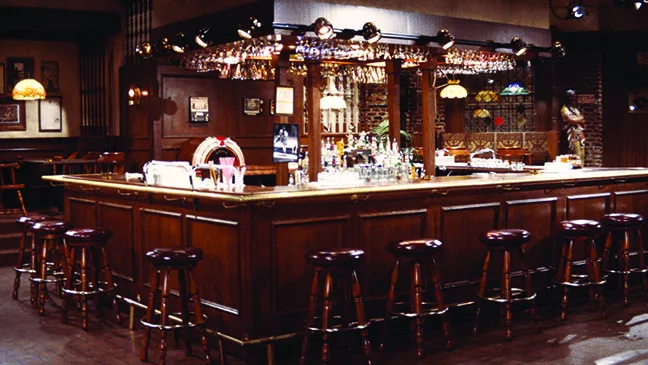
The world of Cheers wasn’t glamorous. It was ordinary. A neighborhood bar. Familiar stools. Familiar faces. And yet, it worked because it met a core human need: to be known.
The song doesn’t celebrate perfection or efficiency. It celebrates belonging.
“You wanna be where you can see / Our troubles are all the same…”
There’s relief in not having to explain yourself from scratch every time. In being understood without performing. In knowing that someone remembers your story—and notices when something feels off.
That desire isn’t nostalgic. It’s generational. It’s wired into us.
When Healthcare Forgot the Barstool
Much of modern healthcare accidentally designed that human need out of the system.
Patients are often reduced to an ID number, a chief complaint, a problem list, and a tightly scheduled visit. Every encounter starts over. New forms. New faces. New explanations. The system may see a diagnosis, but it rarely sees the person.
That isn’t because clinicians don’t care. It’s because the structure no longer leaves room for recognition, continuity, or relationship.
Direct Care Brings Back “Your Seat”
Direct primary care quietly rebuilds what was lost.
In a direct care clinic, your doctor knows your name without checking the chart. Your story doesn’t reset every visit. Context matters as much as lab results. Time is no longer the enemy.
It feels less like a service counter and more like that familiar barstool—not because medicine should be casual, but because trust grows where people are known.
“You wanna go where people know / People are all the same…”
Direct care isn’t about nostalgia. It’s about human-scale medicine. A model that accepts a simple truth: healing works better inside relationships.
Being Seen Changes Outcomes
When patients are known, they show up earlier, ask better questions, and speak more honestly. They trust guidance. They feel safer.
When clinicians are allowed to truly know their patients, burnout drops. Judgment sharpens. Care improves. Medicine becomes meaningful again.
That isn’t a marketing claim. It’s human nature.
The Real Mission of Direct Care
Direct care isn’t primarily about pricing, access, or convenience—though those matter. Its deeper mission is restoring a place where people are recognized, remembered, and respected.
A place where you don’t feel rushed out the door. Where your doctor notices when you’re quieter than usual. Where your care fits your life, not just your diagnosis.
In a world that increasingly treats people as data points, direct care says something quietly radical:
You matter. We see you. Your story counts.
That’s why the Cheers theme still resonates. We’ve always known what we’re missing.
The Coffee Fund
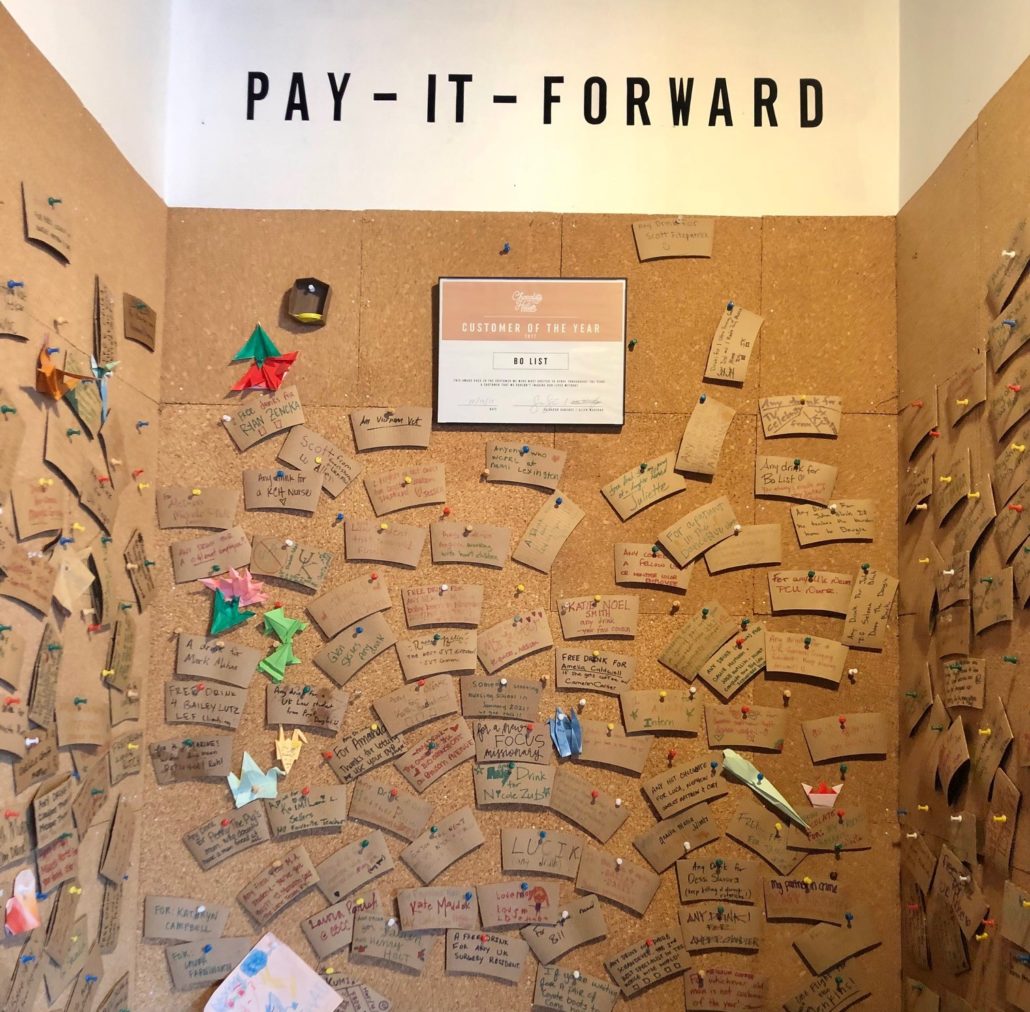
Someone walked into a coffee shop, paid a little extra, and said, “This one’s for whoever needs it next.” No speeches. No spotlight. Just quiet generosity.
Over time, that small act turned into something bigger — a shared understanding that sometimes people don’t need advice, explanations, or systems. Sometimes they just need a warm cup of coffee and the feeling that someone else has their back.
That’s the part that stuck with us.
In Direct Primary Care, we see versions of this every day. A patient who’s been putting off care because money feels tight. Someone who’s embarrassed to ask a “small” question. A family that just needs a little breathing room.
DPC works because it removes the meter. No ticking clock. No surprise bill at the end. No hesitation about whether something is “worth coming in for.” The door is already open.
Much like the coffee fund, the value isn’t just in what’s paid — it’s in what’s removed: friction, fear, and the mental math that too often stands between people and care.
When healthcare is simple and human, generosity shows up naturally. Time becomes easier to give. Questions feel safer to ask. Trust builds quietly, cup by cup.
We don’t think healthcare needs to be louder or more complicated. We think it needs more moments like this — where people are seen, supported, and helped without strings attached.
Sometimes the best systems aren’t the ones that optimize everything. They’re the ones that make kindness easy.
And if that starts with a cup of coffee?
Even better.

Medicine Won’t Shrink to Fit a Dashboard
And yes—some of that squishing is good. Vartabedian is careful here: refills, routine lab review, sterile processing, smart order sets… please, compress away. Healthcare has plenty of waste that deserves to be “unmercifully squished.”
But the essay’s punchline is the part that refuses to compress. The patient’s narrative isn’t “unstructured data” to be tamed; it’s often the entire diagnosis. The hidden agenda. The context that explains why the med “isn’t working,” why the symptoms started now, why this person is scared but pretending not to be. That’s not vibe work—it’s judgment under uncertainty.
This is where I think the direct care movement has something quietly radical to offer. It’s not anti-technology; it’s anti-throughput-as-a-religion. Direct care takes the one variable that most systems treat as a rounding error—time—and makes it the product. You can still use tools, templates, and AI, but they’re aimed at protecting the relationship, not replacing it.
In other words: compress the administrative sludge, not the human encounter.
If we let medicine become fully “dashboard-shaped,” we’ll produce plenty of measurable output and steadily less actual care. But if we get intentional—if we decide what should never be made faster—we can keep the craft intact while still benefiting from smarter systems.
Maybe the future belongs to the clinicians and organizations that learn to say: “Yes, we’ll optimize. And no, we won’t compress that.”

Too Big to Care
The article highlights a staggering number: an estimated $3,200 per person per year swallowed by administrative overhead. Not care. Not outcomes. Paperwork, billing layers, compliance mazes, and middlemen talking to other middlemen. At that size, complexity becomes self-justifying. Entire departments exist to manage the consequences of other departments. No one is evil—but no one is really accountable either.
This is the paradox of modern health care consolidation. Bigger was supposed to mean more efficient. Instead, it often means greater distance between decision-makers and patients. When systems reach this scale, they don’t just lose empathy—they lose feedback. Patients can’t meaningfully vote with their feet, and clinicians can’t easily change how care is delivered. The system becomes optimized for throughput, not trust.
Cuban raises divestiture as a possible cure, but whether breakups happen or not, the diagnosis matters more than the prescription: scale without accountability erodes care. Health care depends on relationships, continuity, and judgment—things that don’t compress well into massive bureaucracies.
The quiet counterpoint is that smaller, simpler models already exist. When care is local, transparent, and directly accountable to the patient—not a distant payer—administrative gravity collapses. Fewer rules are needed because incentives are aligned. Fewer dollars leak because fewer hands touch them.
“Too big to care” isn’t just a critique. It’s a warning label—and maybe permission to build something smaller on purpose.

Kirkland Quality: What Costco Gets Right — and What Direct Care Can Learn
Kirkland isn’t “cheap.” It’s intentionally excellent. Costco is willing to put its name behind fewer products, demand higher quality, accept lower margins, and walk away from suppliers who won’t meet standards. The result? A brand customers trust almost automatically.
That philosophy maps surprisingly well to :contentReference[oaicite:2]{index=2}.
1. Fewer Options, Higher Confidence
Kirkland doesn’t offer twelve versions of olive oil. It offers one — because Costco already did the hard work. Customers don’t want infinite choice; they want confidence.
Direct care works the same way. Instead of endless networks, tiers, authorizations, and fine print, patients get a simple promise: this is your doctor, this is what it costs, this is how it works. Less cognitive load. More trust.
2. Radical Quality Control
Kirkland products are often manufactured by top-tier brands — just held to stricter specs and sold without the marketing markup. Costco’s reputation is on the line, so quality is non-negotiable.
In direct care, quality isn’t outsourced to billing rules or insurance incentives. Time, access, continuity, and clinical judgment are the product. When physicians answer directly to patients instead of payers, quality improves because accountability is immediate and personal.
3. Honest Pricing, Not Psychological Games
Costco’s margins are famously thin. They don’t rely on coupons, gotchas, or “limited-time” tricks. Customers know they’re getting a fair deal — every time.
Direct care mirrors this with transparent pricing, no surprise bills, and no post-visit financial anxiety. Patients don’t wonder what something might cost weeks later. They know upfront.
The Real Lesson: Earned Trust Scales
Kirkland didn’t grow by promising everything to everyone. It grew by being dependable, boring in the best way, and relentlessly focused on value.
Direct care doesn’t need to out-market the healthcare system. It just needs to out-behave it.
Trust, once earned, does the rest.