Putting Patients First — For Real
Every so often, a healthcare headline actually feels like good news.
This week, Becker’s Hospital Review highlighted New Jersey’s decision to eliminate $86 million in medical debt for residents across the state. No complicated applications. No fine print. Just debt erased for people who needed relief.
That matters.
Medical debt is one of the clearest signs that the system has drifted away from patients. People don’t end up buried in bills because they made poor choices — they end up there because pricing is opaque, coverage is confusing, and care is often disconnected from real-world affordability.
What New Jersey did won’t fix healthcare on its own. But it does something important: it acknowledges that the problem is systemic, not personal. And it treats patients like people, not line items.
We need more policies — and more care models — that start from that same assumption.
Healthcare works best when the goal isn’t maximizing complexity or shifting risk, but removing barriers and restoring trust. This move is a reminder that putting patients first isn’t a slogan. It’s a set of choices.
And this was a good one.

If Direct Care Is So Obvious, Why Isn’t Everyone Doing It?
Direct care has a strange effect on people encountering it for the first time.
They hear the basics — transparent prices, unhurried visits, direct access to their doctor — and there’s often a pause. A moment of silence. Then the reaction:
“Well… yeah. That just makes sense.”
That reaction has a name.
In Obvious Adams: The Story of a Successful Businessman by Robert R. Updegraff, the author describes the “explosion” moment — when an idea is so clear, so grounded in common sense, that once you see it, you can’t unsee it. You’re left wondering why it wasn’t obvious all along.
Direct care creates that same explosion.
So the natural follow-up question becomes uncomfortable:
If direct care is so obvious… why isn’t everyone doing it?
The honest answer is this:
Because obvious ideas are rarely easy ideas.
Obvious ideas demand risk tolerance
Direct care requires stepping away from a system that feels safe, even when it’s broken.
The traditional healthcare model offers predictability:
- A paycheck tied to volume
- A billing department to absorb complexity
- Someone else to blame when things go wrong
Direct care removes those buffers.
It replaces them with ownership — of outcomes, finances, relationships, and mistakes. That’s liberating for some physicians. Terrifying for others. The model isn’t risky because it’s flawed. It’s risky because responsibility can’t be outsourced.
Obvious ideas challenge professional identity
Many physicians were trained to believe that legitimacy comes from proximity to large institutions:
- Big hospitals
- Big insurers
- Big systems
Direct care quietly undermines that belief.
It suggests that a physician’s value doesn’t come from scale, codes, or contracts — but from judgment, continuity, and trust. That’s a harder identity to sit with. It forces a reckoning with questions most professionals are never asked to answer directly:
What am I worth — without the system behind me?
Obvious ideas require comfort with ambiguity
Fee-for-service medicine offers clear metrics:
- RVUs
- Panel targets
- Productivity dashboards
Direct care offers fewer numbers and more gray space.
Success looks like:
- Fewer visits, but better ones
- Fewer patients, but deeper relationships
- Fewer rules, but more judgment calls
For people who find comfort in protocols and external validation, that ambiguity can feel unsettling. Obvious solutions don’t come with instruction manuals — they come with accountability.
Obvious ideas threaten the system itself
Perhaps the most important reason direct care isn’t universal is this:
Obvious ideas expose unnecessary complexity.
Direct care doesn’t loudly attack the healthcare system. It does something more dangerous — it ignores it. And in doing so, it reveals how much of modern healthcare complexity exists not because it’s required, but because it’s tolerated.
That’s uncomfortable for institutions built on intermediaries, abstractions, and distance between decision-makers and consequences.
Obvious doesn’t mean inevitable
In Obvious Adams, the hero isn’t a genius. He’s simply willing to say what others are unwilling to say — and act on what others are unwilling to act on.
Direct care isn’t rare because it doesn’t work.
It’s rare because it demands courage disguised as simplicity.
The ideas are obvious.
The responsibility is not.
And that’s why, even when people see it clearly — when the explosion happens — not everyone chooses it.
Because seeing the obvious is one thing.
Living it is another.

Privilege, Responsibility, and the Quiet Promise of Direct Care
Sadhguru once wrote, “Every privilege comes with a responsibility. If you don’t take the responsibility, you will lose the privilege.” It’s a simple line, but it cuts straight to the heart of what makes direct care work — and why it’s fragile if we’re not intentional about it.
Sadhguru isn’t talking about healthcare specifically, but the idea maps almost perfectly onto direct primary care.
Direct care is a privilege. It’s the privilege of time — longer visits, unhurried conversations, knowing patients as people instead of CPT codes. It’s the privilege of trust — patients paying directly because they believe their physician will act in their best interest. It’s the privilege of autonomy — clinicians practicing medicine without layers of bureaucracy dictating every decision.
But those privileges don’t exist in a vacuum.
They come with responsibility.
For clinicians, the responsibility is stewardship. Time must be used wisely, access must be protected, and pricing must remain honest and transparent. If direct care turns into exclusivity without accountability, or convenience without commitment, it risks losing the very trust that makes it possible.
For patients, the responsibility is participation. Direct care works best when patients engage — asking questions, respecting boundaries, and partnering in their own health rather than outsourcing all responsibility.
And for the movement as a whole, the responsibility is restraint. Just because we can market aggressively, oversell benefits, or blur lines doesn’t mean we should. The long-term privilege of practicing and expanding direct care depends on credibility, humility, and putting patients first — especially when no one is forcing us to.
Direct care isn’t guaranteed. It’s earned daily.
If we carry the responsibility seriously, the privilege endures. If we don’t, history suggests it won’t.
When ACA Subsidies Expire, Coverage Losses Are Coming — and Patients Feel It First
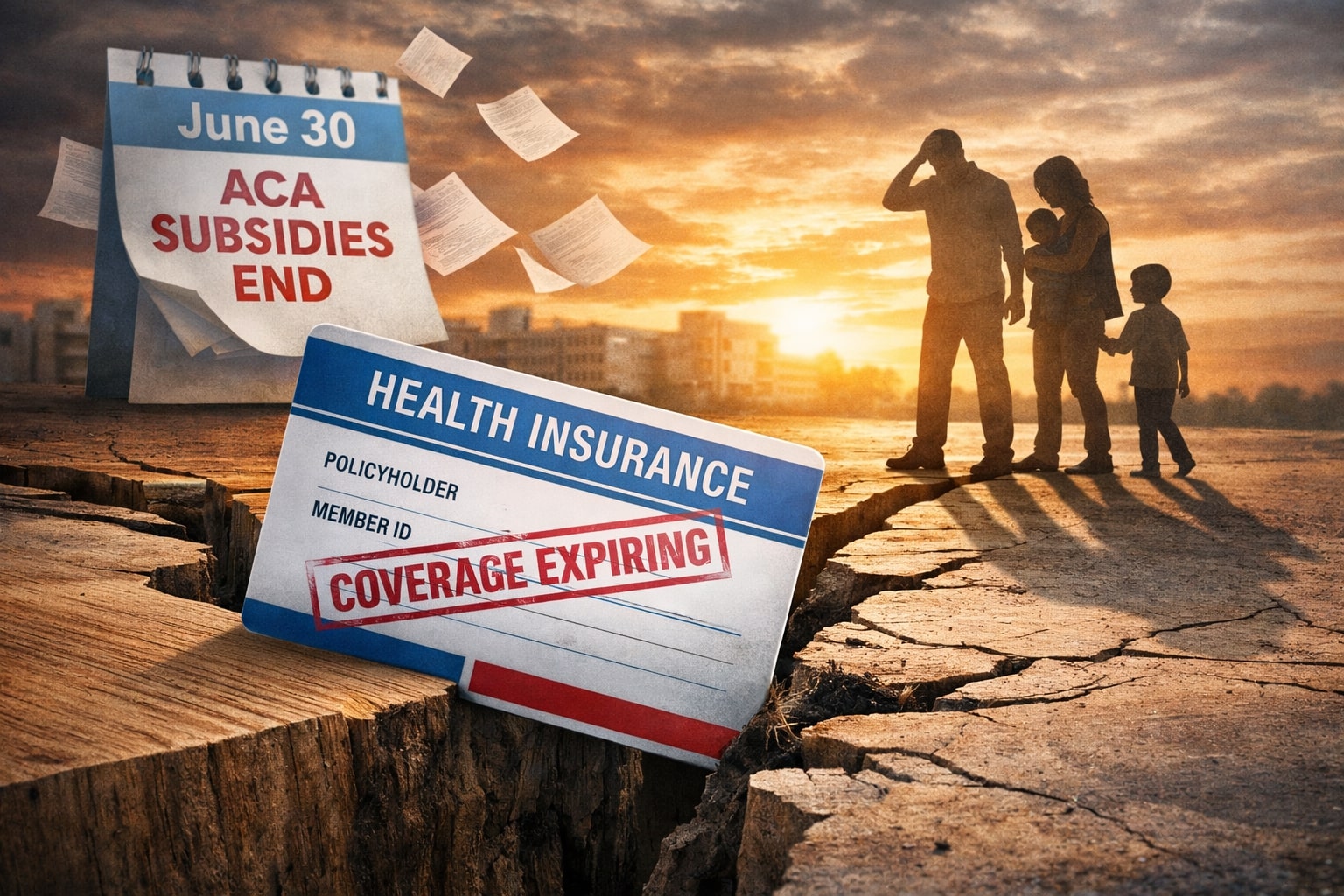
A recent report from Beckers highlights a growing reality across the U.S.: as enhanced ACA subsidies expire, millions of people are expected to lose health coverage or face sharply higher premiums.
For many families, this isn’t about policy debates. It’s about stability.
People who budgeted responsibly, chose coverage in good faith, and stayed insured may suddenly be forced to change plans—or go without coverage altogether. In some states, the impact is expected to be especially severe.
When coverage becomes unstable, care suffers.
Patients delay visits.
Preventive care gets skipped.
Small problems turn into expensive emergencies.
This cycle exposes a deeper issue in American healthcare: insurance and care are often tightly bundled, even though they serve very different purposes.
Rethinking How Coverage Works
More people are beginning to explore models that separate everyday care from financial protection against major events, rather than relying on one complex insurance product to do everything.
Combinations like:
- Direct primary care memberships for accessible, relationship-based care, and
- Alternative insurance options focused on catastrophic protection
are gaining attention because they offer:
- Predictable monthly costs
- Faster access to primary care
- Fewer surprises when subsidies or plan rules change
These models aren’t about replacing insurance entirely. They’re about giving patients options when traditional systems shift beneath them.
Why This Matters Now
Healthcare shouldn’t feel like a countdown clock tied to expiring policies.
As the coverage landscape changes, patients deserve transparency, simplicity, and stability—especially during uncertain transitions.
At Atlas Direct Insurance, we believe healthcare works best when it’s straightforward, honest, and centered on real access to care.
If your coverage options are changing, there are alternatives worth understanding.

What Texas Roadhouse Can Teach Us About Direct Primary Care
Most people don’t expect a national steakhouse chain to offer lessons about healthcare.
But Texas Roadhouse might be one of the clearest examples we have of what happens when the people closest to the work are treated like owners — not interchangeable labor.
And the results are strikingly relevant to primary care.
A Founder Who Trusted the People Doing the Work
Texas Roadhouse was founded by Kent Taylor, a restaurant operator who believed something simple and radical:
If you want great service, you have to trust the people delivering it.
Instead of tightly controlling every decision from corporate headquarters, Taylor built a system where local managing partners:
- Had real autonomy
- Were rewarded based on long-term performance
- Were encouraged to think like owners, not rule-followers
Managers weren’t just enforcing policies.
They were building relationships, investing in staff, and protecting the guest experience as if it were their own business.
And customers could feel the difference.
Why Owner-Operators Outperform Employees
This wasn’t about “working harder.”
It was about incentives and alignment.
When someone:
- Controls their environment
- Benefits directly from quality and consistency
- Isn’t punished for doing the right thing
They make better decisions.
They solve problems instead of escalating them.
They focus on long-term trust, not short-term metrics.
They care — because it’s theirs.
Healthcare Chose the Opposite Path
Modern healthcare did the reverse.
Physicians were:
- Stripped of ownership
- Buried under protocols designed far from the exam room
- Evaluated by productivity metrics instead of patient outcomes
Most doctors today function less like professionals and more like shift workers — with limited autonomy, limited continuity, and limited ability to fix what’s broken.
Patients feel that too:
- Rushed visits
- Fragmented care
- Endless referrals
- “That’s just policy” answers
Direct Primary Care Flips the Model Back
Direct Primary Care (DPC) restores something healthcare lost: physician ownership.
In DPC:
- The doctor owns the practice
- The doctor sets visit length and access
- The doctor is accountable directly to patients, not payers
That changes behavior immediately.
Doctors can:
- Spend time instead of rushing
- Solve problems instead of deferring them
- Prioritize relationships over billing codes
Just like the best Texas Roadhouse managers, DPC physicians act like owners — because they are owners.
Why Patients Win
This isn’t about physician comfort.
It’s about patient outcomes.
Ownership leads to:
- Better access
- Continuity of care
- Lower total costs
- Fewer unnecessary referrals
- Faster problem-solving
Patients don’t need a “network.”
They need someone who owns the responsibility for their care.
This Isn’t Radical — It’s Common Sense
We’ve seen this movie before.
In restaurants.
In small businesses.
In education.
In trades.
When professionals are trusted, empowered, and accountable, quality improves.
Direct Primary Care isn’t an experiment.
It’s a return to a model that works — because it aligns incentives with humanity.
Legendary service.
Legendary care.