If Direct Care Is So Obvious, Why Isn’t Everyone Doing It?
Direct care has a strange effect on people encountering it for the first time.
They hear the basics — transparent prices, unhurried visits, direct access to their doctor — and there’s often a pause. A moment of silence. Then the reaction:
“Well… yeah. That just makes sense.”
That reaction has a name.
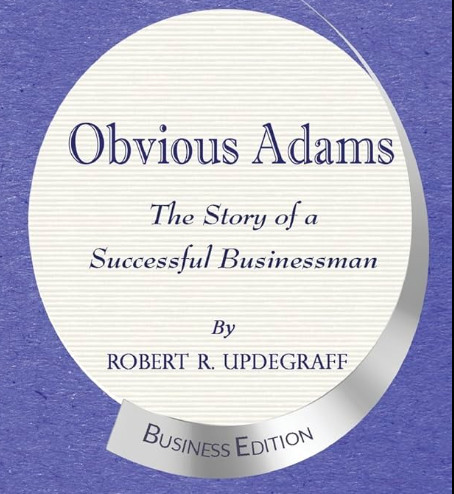
In Obvious Adams: The Story of a Successful Businessman by Robert R. Updegraff, the author describes the “explosion” moment — when an idea is so clear, so grounded in common sense, that once you see it, you can’t unsee it. You’re left wondering why it wasn’t obvious all along.
Direct care creates that same explosion.
So the natural follow-up question becomes uncomfortable:
If direct care is so obvious… why isn’t everyone doing it?
The honest answer is this:
Because obvious ideas are rarely easy ideas.
Obvious ideas demand risk tolerance
Direct care requires stepping away from a system that feels safe, even when it’s broken.
The traditional healthcare model offers predictability:
- A paycheck tied to volume
- A billing department to absorb complexity
- Someone else to blame when things go wrong
Direct care removes those buffers.
It replaces them with ownership — of outcomes, finances, relationships, and mistakes. That’s liberating for some physicians. Terrifying for others. The model isn’t risky because it’s flawed. It’s risky because responsibility can’t be outsourced.
Obvious ideas challenge professional identity
Many physicians were trained to believe that legitimacy comes from proximity to large institutions:
- Big hospitals
- Big insurers
- Big systems
Direct care quietly undermines that belief.
It suggests that a physician’s value doesn’t come from scale, codes, or contracts — but from judgment, continuity, and trust. That’s a harder identity to sit with. It forces a reckoning with questions most professionals are never asked to answer directly:
What am I worth — without the system behind me?
Obvious ideas require comfort with ambiguity
Fee-for-service medicine offers clear metrics:
- RVUs
- Panel targets
- Productivity dashboards
Direct care offers fewer numbers and more gray space.
Success looks like:
- Fewer visits, but better ones
- Fewer patients, but deeper relationships
- Fewer rules, but more judgment calls
For people who find comfort in protocols and external validation, that ambiguity can feel unsettling. Obvious solutions don’t come with instruction manuals — they come with accountability.
Obvious ideas threaten the system itself
Perhaps the most important reason direct care isn’t universal is this:
Obvious ideas expose unnecessary complexity.
Direct care doesn’t loudly attack the healthcare system. It does something more dangerous — it ignores it. And in doing so, it reveals how much of modern healthcare complexity exists not because it’s required, but because it’s tolerated.
That’s uncomfortable for institutions built on intermediaries, abstractions, and distance between decision-makers and consequences.
Obvious doesn’t mean inevitable
In Obvious Adams, the hero isn’t a genius. He’s simply willing to say what others are unwilling to say — and act on what others are unwilling to act on.
Direct care isn’t rare because it doesn’t work.
It’s rare because it demands courage disguised as simplicity.
The ideas are obvious.
The responsibility is not.
And that’s why, even when people see it clearly — when the explosion happens — not everyone chooses it.
Because seeing the obvious is one thing.
Living it is another.